

The summer is not as long as people think, and the athletes who understand that treat it differently. Here is exactly what to do with the time you actually have.
Every year I have the same conversation with athletes and parents around late May or early June. There's this sense that summer is long, that there's plenty of time, and that they'll get to it. And then August shows up. It’s time to go back to school, and for some athletes, the season is three weeks away and nothing meaningful was built over the summer.
Summer is not three months of open runway. It never was. Once you account for vacations, travel, AAU and club schedules, camps, and the time it takes to actually ramp up training, the real trainable window is much shorter than people realize. College athletes typically have 11 to 12 weeks. High school athletes have between 7 and 9. That is the window. Everything you want to build before next season has to happen inside of it.
This is the most important training window of the year. Not because summer is magical, but because it's the one of the only times you have enough space, recovery capacity, and uninterrupted weeks of training to actually change your athleticism. You capture this window, and it sets the tone for the entire year. It raises your baseline. Miss it, and you are spending the fall playing catch-up in a season where there isn’t much time to catch up.
Why summer is the window to change your athleticism
Here is something most athletes don't understand about their own physical development, and it's one of the most important things I teach: training for different athletic qualities interfere with each other, and they fade at completely different rates when you stop training them.
Here is what most athletes don't understand about their own physical development: every athletic quality fades at a different rate when you stop training it. And some of them fade much faster than you think.
Speed and Agility
5–7 days
The first quality to go. Loses 5 to 10% within one week of no sprint work.
Strength
3–4 wks
Most durable adaptation. Holds well before meaningful decline begins.
Power
2–3 wks
Fades faster than strength. Requires consistent plyometric exposure to hold.
Anaerobic Capacity
7–12 days
Drops off within the first week to two weeks of inactivity.
Aerobic Capacity
10–14 days
VO2 max decline becomes measurable within two weeks of no training.
Speed is the first quality to go, the decline starts within five to seven days of not sprinting; less than one week. Power starts fading within two to three weeks. Aerobic capacity becomes measurably worse within ten to fourteen days, and significantly after 30. These are not long windows. And for athletes who treat summer as a casual break, those qualities are already quickly fading before they even realize the season is approaching.
Strength is the outlier. It's your most durable investment, holding for 3 to 4 weeks before meaningful decline begins. That means the strength you build in the summer can carry into the season and holds up longer than anything else you develop. As you maintain throughout the year, you raise your baseline. Build it now and you can maintain it with significantly less effort once practices and games take over the schedule.
This is why summer training, done with intention and a real plan, changes the trajectory of an entire year. The qualities that fade the fastest need the most consistent exposure. You have that time right now. You will not magically have it once the season starts.
The athlete who builds from summer to summer
The best athletes I have worked with over the last nine years think about their development differently. They don't think season to season. They think summer to summer. Each summer is a new opportunity to come back as a different athlete. Faster, stronger, more explosive, more durable. And each summer that's used well raises the baseline that the next season starts from.
The athletes who don't develop that way are the ones who train inconsistently in the summer, show up to preseason feeling okay, and then spend the first two months of the school year just getting back to where they were the previous spring. They never actually gain ground. They just tread water year after year and wonder why they've plateaued.
“You capture this window and it sets the tone for the rest of the year. You miss it and you spend the fall playing catch-up in a season that has no room for it."
10 things every athlete should do this summer
This is not a general list. This is exactly what intentional summer training looks like for the athletes I work with. Every item on this list has a purpose.
Have a plan for the full 7 to 12 weeks and put it on a calendar. If you’re not managing your time, you’re not managing your energy, and more importantly your recovery. Manage your time week to week, have a plan for each week and each day of trainng. Account for travel, tournaments, and commitments in advance. An athlete with a calendar is an athlete with a direction. Everything else is just showing up.
Build a consistent mobility and warmup routine specific to your body and needs. Not a generic YouTube warmup. Something built around where you're tight, where you're weak, and what your sport demands. Do it before every session, every time.
Get brutally strong. Pick one or two upper and lower body movements and progress them across the entire summer. Use accessories to build muscle. Keep it simple and keep moving the numbers forward.
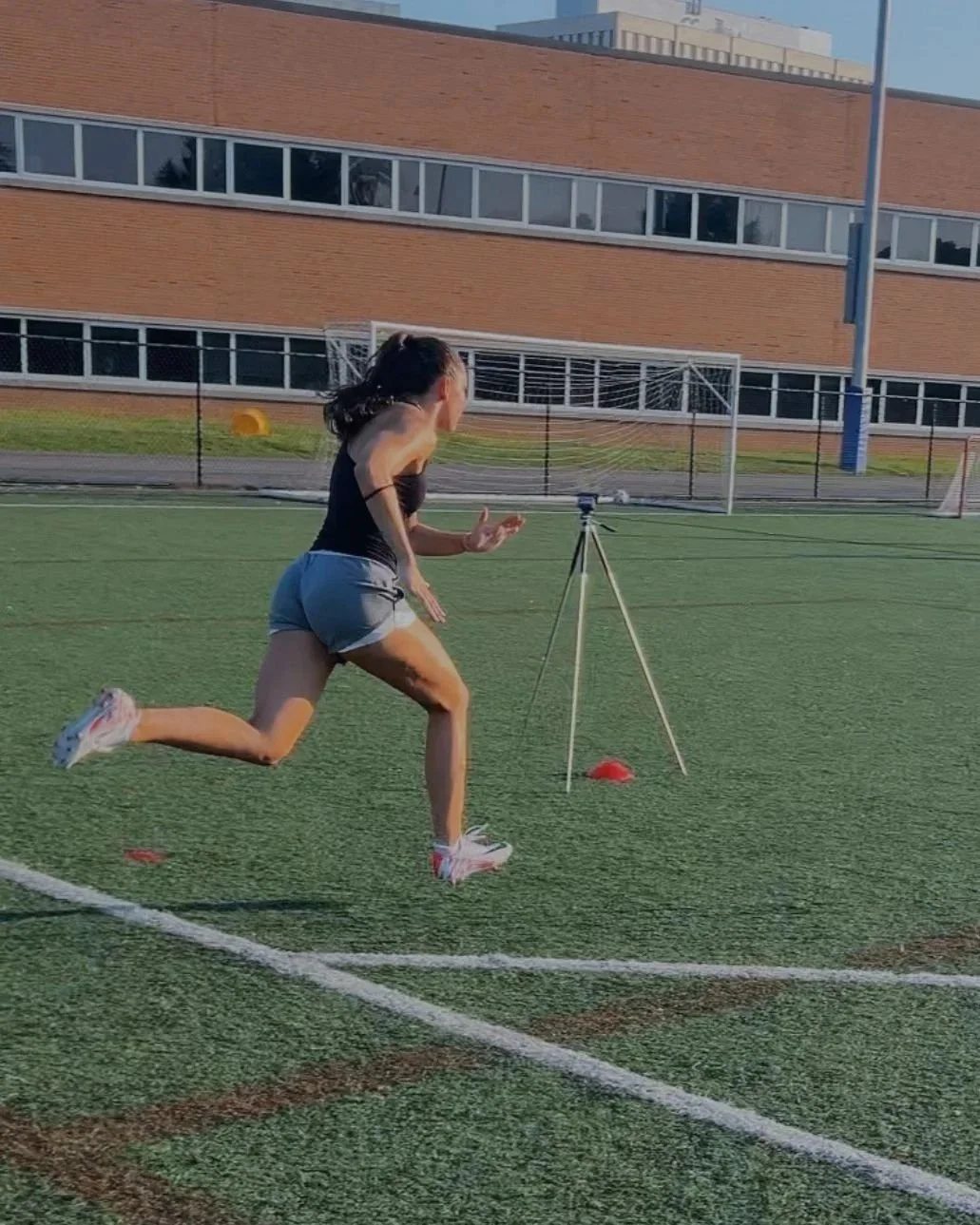
Sprint one to two times per week. Speed is the first quality to fade and the hardest to rebuild under a season schedule. Protect it by training it consistently all summer.
Plyometrics 2x per week. Power has a ten to fourteen day residual. You need consistent exposure to develop it and hold onto it. Two sessions per week is the minimum to move the needle.
Lift 2-4x per week, preferably 3 to 4 consistently. Showing up three or four times a week, every week, for eight to twelve weeks does more than sporadic intense sessions. Consistency over the full window beats heroics in week two.
Time your sprints and compete on them. At least once a week, race yourself or someone else. Time your sprints if you have access, they give you objective data on whether you are actually getting faster. Competing in practice builds the edge that shows up in games.
Lock in on your nutrition Monday through Friday. Get disciplined on your meals during the week. Eat to perform and recover, not just to eat. The summer is when building your body is the priority. Treat food like part of the training plan, because it is.
Plan two intentional off days per week. Working hard is good. Working intentionally is better. Two off days built into the week are not wasted days. They are the days the body absorbs the work. Running yourself into the ground by week four means the back half of the summer produces nothing.
Make recovery a non-negotiable part of the plan. Sleep. Hydration. Nutrition. These aren't bonus habits. They are the mechanism by which everything else works. Every session you invest in this summer returns more when recovery is taken seriously. Every session you shortchange on the back end of recovery returns less.
Seven to twelve weeks is enough time to become a genuinely different athlete. It is not enough time to waste three weeks, train hard for two, and then coast into August. Every week of this window has a job. Give it one.
This is the work we build with every athlete at HalseyPerformance over the summer. A plan, a direction, and the structure to make every week of this window count.
Ready to make this summer count? Summer spots are limited. Reach out now to build your plan.
