

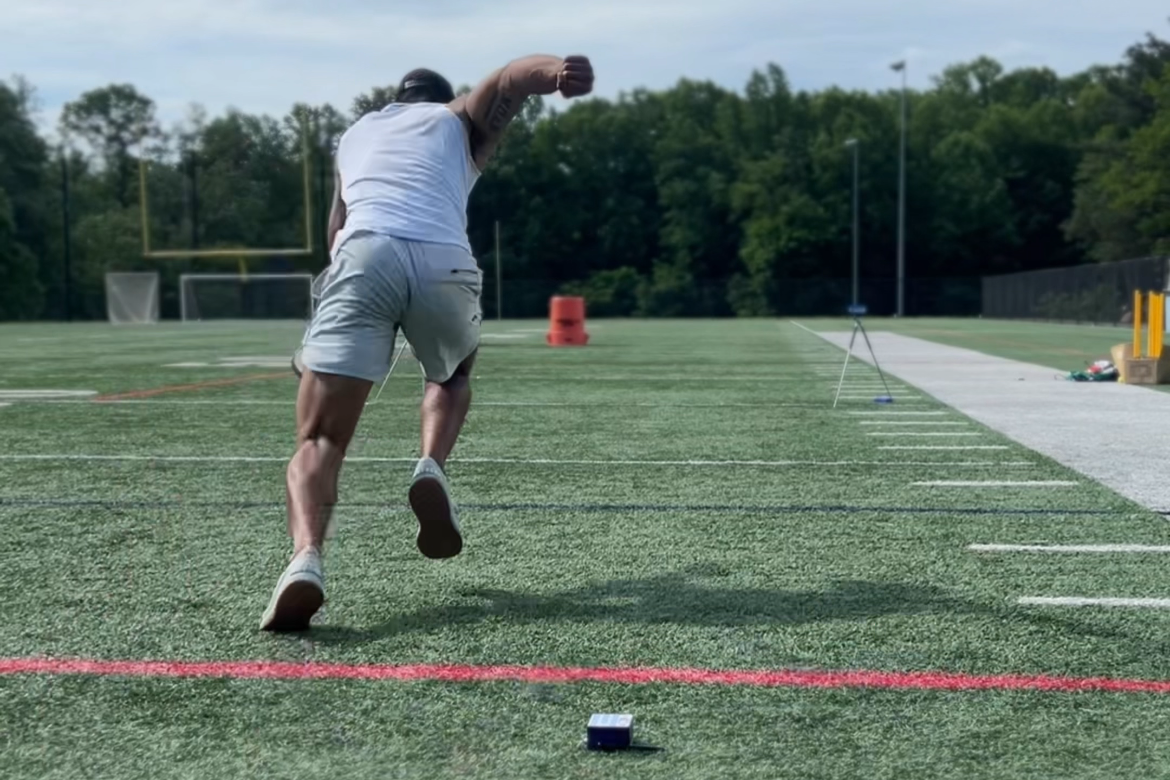
The game has never been more competitive. More players, more film, more training. Skill is no longer enough to stand out. Here is what actually separates athletes in today's recruiting environment, in every sport.
Here is what share with almost every athlete who has serious aspirations or desires to play at the next level: skill is the baseline now, athleticism is what separates players.
That's not a motivational or some pump up statement, it's the reality of what is happening right now in this increasingly competitive climate at every level of sports. You see it from high school tryouts, to college recruiting, to now the transfer portal. And if you're a player, a parent, or a coach who isn't thinking about this yet, or haven’t fully invested into it, you need to be.
Case study: Let’s look at Basketball in America and The numbers behind the competition
The pool of basketball players in this country is enormous and still growing. According to the NFHS, nearly 900,000 students played high school basketball in the 2024-25 school year, making it the most sponsored team sport in the country for both boys and girls.
897K
high school basketball players in 2024-25
1%
of high school players reach Division I
2,700+
players entered the transfer portal in 2024-25
Sources: NFHS 2024-25 Participation Survey; NCAA.org; ESPN Transfer Portal
Nearly 900,000 high school basketball players. Only 1 percent of boys will play Division I. That means roughly 1 in 100 players who step on a high school court will compete at the highest college level. The competition is not just at the top. It starts the moment a kid tries out for a team.
The transfer portal has changed everything
Here's something that has fundamentally shifted the recruiting landscape in the last few years: the transfer portal. In 2024-25, over 2,700 Division I men's basketball players entered the portal, with coaches expecting the number to exceed 3,000 in the following cycle. We are seeing similar numbers even in the women’s game.
College coaches who once filled roster spots through high school recruiting now have the ability to pull experienced, college-proven players at will, and now overseas pros with experience. That raises the bar for what an incoming freshman needs to offer. Coaches don't just want skilled players anymore. They want athletes who can step into a college environment physically and contribute immediately. You cannot transfer a skill advantage. But an athleticism gap shows up in the first practice.
What recruiting coaches actually look at
I've had enough conversations with coaches at multiple levels to tell you what they are looking at beyond the skill work: can this athlete move? How quick are they laterally? How explosive are they off the floor? How do they hold up in the fourth quarter when fatigue is real? Can they guard multiple positions?
These are physical questions. They're answered by how an athlete moves, not just how they shoot. A player who can score but doesn't move well is a liability at the next level. A player who moves well and has a developing skill set is a prospect worth developing. That's the lens college coaches use, and it has only gotten sharper as the portal has increased roster competition.
We are seeing the same trends in every sport, not just basketball
This changing landscape in the recruiting conversation above isn't unique to basketball. It's happening in every sport your athlete plays, and the lens coaches use is the same regardless of the sport: skill gets you noticed, athleticism is what determines whether you can compete at the next level.
College coaches across all sports evaluate athletic ability first when they begin assessing recruits, looking specifically at strength, speed, endurance, power, and agility. The sport changes. The physical question doesn't.
SOCCER
The pace, pressing, and defensive intensity at the college level separates players who are technically sound from players who are technically sound and physically built for 90 minutes. 88% of college women's soccer players and 77% of men's played club before college. Coaches are watching how physical qualities hold up under fatigue across a full tournament weekend, and they remember.
LACROSSE
The sport is growing rapidly and the athleticism bar at the college level is rising with it. Coaches are looking for athletes who can win fifty-fifty balls, use their speed and agility to get past defenders in space, close out and control space defensively, and hold up physically through a full game. The player who can do all of that and also move better than everyone else on the field gets offered first.
BASEBALL AND SOFTBALL
Athleticism is consistently underestimated in these sports. Arm strength, rotational power, first-step quickness, and the ability to cover ground are all physical qualities that are trained and developed. 94% of college softball players and 85% of baseball players competed on club teams. Coaches see these athletes repeatedly across long tournament days. The ones who produce power consistently and move well stand out.
HOCKEY
The sport demands explosive power, lateral agility, and sustained conditioning that very few athletes develop without intentional off-ice training. The players who invest in their athleticism off the ice show up differently when skates go on. It shows in their acceleration, their battles along the boards, and how they perform in the third period when everyone else is running on empty.
Across every one of these sports, coaches at every level are making decisions based on the same physical questions. Can this athlete handle the pace? Can they hold up physically over a full season? Do they have the athleticism to develop into what we need? Skill is the ticket to be evaluated. Athleticism is what determines what happens next.
Athleticism is trainable
Here's what a lot of people don’t fully realize: the athletic qualities that coaches are evaluating are not fixed. Speed, lateral quickness, first-step explosiveness, vertical, conditioning, the ability to sustain effort into the fourth quarter, all of it is trainable. All of it responds to the right preparation.
That's the core of what we do at HalseyPerformance. Not just make athletes stronger for the sake of it, but developing the specific athletic qualities that make them more recruitable, more impactful on the floor, and harder to guard or stop.
The athletes I've worked with over the last nine years who have gone on to play at the next level weren't always the most talented players on their team when they started. Some of them weren't even starters. What changed is they became the most physically prepared. They became the most athletic version of themselves. And when coaches watched them move, they didn't see a question mark. They saw an answer.
"Skill is the baseline now. Athleticism is what separates players."
If you're serious about playing at the next level, or even just becoming the best version of yourself on the floor, the question isn't whether athleticism matters. The question is whether you're doing anything about it.
The ones who are, show up differently. Every time.
Ready to develop your athleticism? We train 350+ athletes across 19 teams. Private training available.
